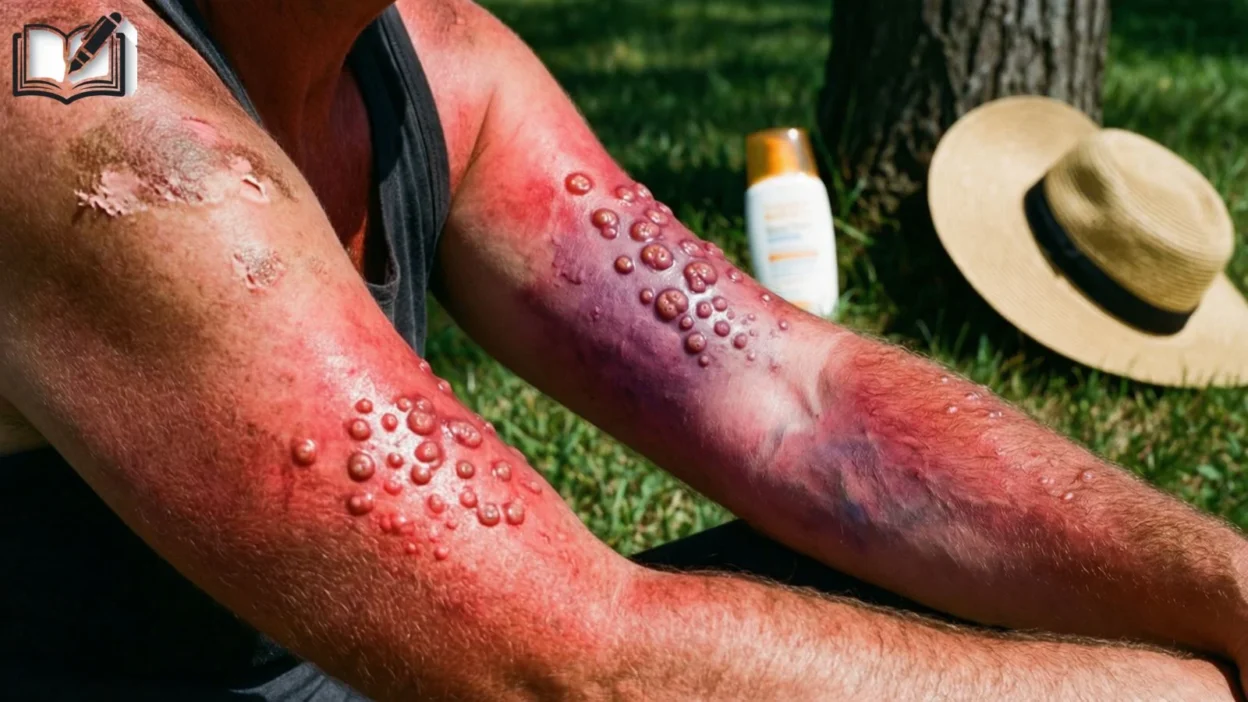
We’ve all spent hours in the sun — at the beach, hiking, or just outdoors — only to end up red, itchy, and uncomfortable. But sometimes, what seems like a normal sunburn can actually be sun poisoning. If you’ve ever wondered what does sun poisoning look like, you’re not alone.
Many people mistake it for a severe sunburn, but sun poisoning symptoms are more intense and may require medical attention.
Quick Answer:
Sun poisoning is a severe reaction to excessive sun exposure. It can cause blisters, rash, swelling, and even fever or nausea, and is more serious than a regular sunburn.
What Does Sun Poisoning Look Like? 🩹
Sun poisoning happens when your skin reacts strongly to UV radiation. Recognizing it early is crucial. Typical sun poisoning symptoms include:
- Bright red, painful skin
- Blisters or hives (sun poisoning blisters)
- Swelling or inflammation
- Severe itching (sun poisoning rash)
- Fever, chills, or nausea in extreme cases
Severity Checklist:
| Severity | Symptoms | Action Step |
| Mild | Redness, slight itch | Cool bath, aloe vera, hydration |
| Moderate | Blisters, swelling, rash | Seek medical advice if persistent |
| Severe | Fever, chills, nausea, large blisters | Immediate doctor visit required |
In short: Sun poisoning = Severe sunburn + systemic reaction = Red, blistered, swollen skin with possible fever or nausea.
How Sun Poisoning Appears on Different Skin Types 🌞
Sun poisoning can look different depending on skin tone:

- Fair Skin: Bright red, easily blistered, visible rash
- Medium Skin: Dark pink or reddish-brown, rash may appear raised
- Dark Skin: Deep red or purplish, rash may be less obvious, swelling more noticeable
Knowing this helps identify sun poisoning early regardless of skin tone.
Where Sun Poisoning Is Most Common 🏖️
Sun poisoning occurs in areas of high UV exposure:
- Beaches & Pools 🏖️ – Prolonged sunbathing without protection
- Mountains & Ski Slopes ⛷️ – Stronger UV at high altitudes
- Outdoor Sports ⚽ – Soccer, hiking, running during peak sunlight
- Tanning Beds 🌈 – Artificial UV rays
⚠️ Sun poisoning is serious and medical in nature, not just a social or cosmetic issue. Anyone can get it if overexposed.
How to Identify Sun Poisoning Quickly 💬
Here are real-life examples of sun poisoning symptoms in conversation:
- A: “My back is red and really itchy 😩”
B: “That sounds like sun poisoning! Do you see any blisters?” - A: “I was at the beach for 5 hours without sunscreen 😬”
B: “Hope you’re not feeling dizzy — those are classic sun poisoning symptoms.” - A: “My arms are swollen and full of hives!”
B: “Yikes, that’s more than a normal sunburn — sun poisoning rash alert 🚨” - A: “I even have a fever after tanning ☀️🤒”
B: “Definitely sun poisoning — time to see a doctor!” - A: “Blisters on my shoulders… should I pop them?”
B: “No! Leave them alone and get medical advice — sun poisoning blisters should never be popped.”
Prevention and Treatment of Sun Poisoning ✅❌
Prevention Tips:
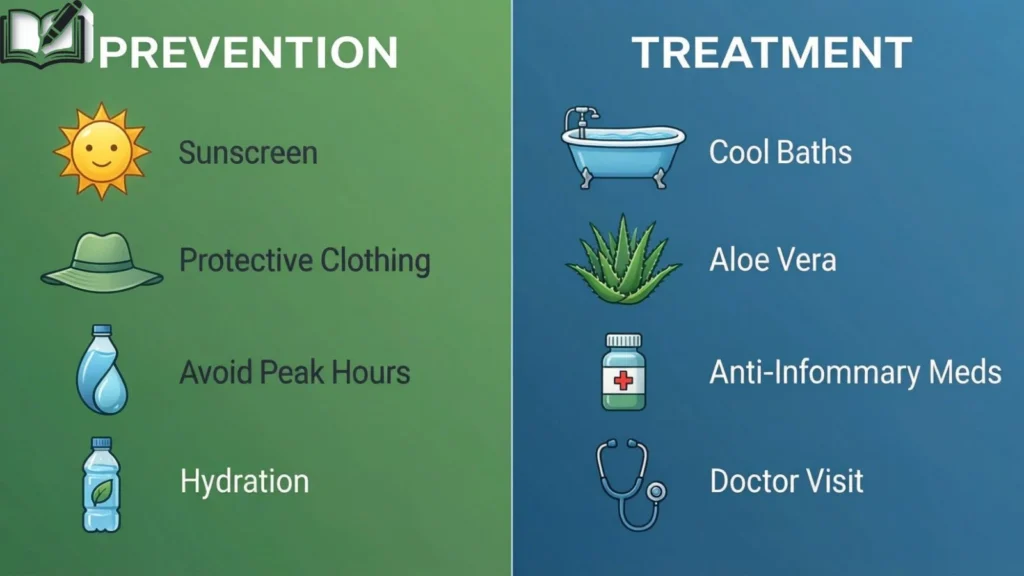
- Use sunscreen SPF 30+ every 2 hours
- Wear protective clothing and hats
- Avoid peak sun hours (10 a.m.–4 p.m.)
- Stay hydrated and take breaks in shade
Treatment Tips:
- Cool baths or compresses
- Apply aloe vera or soothing lotion
- Anti-inflammatory medication if recommended
- Avoid sun exposure until healed
- Seek medical attention for blisters, fever, or nausea
Comparison Table:
| Context | Example Phrase | Why It Works |
| Casual Advice | “Don’t stay out too long or you’ll get sun poisoning ☀️” | Friendly, clear warning |
| Medical Advice | “Seek a doctor for sun poisoning blisters, rash, or fever.” | Professional, accurate guidance |
| Social Post | “Sun poisoning hit me hard this weekend 😩” | Relatable and attention-grabbing |
Similar Conditions or Alternatives 🌡️
| Condition | Meaning | When to Use |
| Severe Sunburn | Red, painful skin without systemic symptoms | Mild outdoor exposure |
| Heat Rash | Small red bumps from sweat and irritation | Hot, humid weather |
| Sun Allergy | Rash or hives triggered by sunlight | Photosensitive reactions |
| Photodermatitis | Skin reaction to sunlight + chemicals or meds | Medicinal or chemical exposure |
FAQs About Sun Poisoning ❓
Q1: How long does sun poisoning last?
A: Typically 3–7 days, depending on severity and treatment.
Q2: Can sun poisoning cause long-term damage?
A: Yes. Repeated sun poisoning increases risk of skin damage, premature aging, and skin cancer.
Q3: How do I treat sun poisoning at home?
A: Use cool baths, aloe vera, hydration, and anti-inflammatory meds. Severe cases need a doctor.
Q4: How can I prevent sun poisoning?
A: Apply SPF 30+ sunscreen, wear protective clothing, avoid peak sun hours, and stay hydrated.
Q5: Is sun poisoning the same as heatstroke?
A: No. Sun poisoning affects the skin, while heatstroke affects body temperature regulation.
Q6: How can I tell if I have sun poisoning vs severe sunburn?
A: Sun poisoning usually includes blisters, rash, swelling, fever, or nausea, whereas severe sunburn is mostly just red, painful skin.
Conclusion
Sun poisoning is more than just a bad sunburn — it’s a serious skin reaction caused by excessive sun exposure. Recognizing what sun poisoning looks like, including blisters, rash, swelling, and even fever or nausea, is crucial for protecting your skin and overall health.
Early identification, proper treatment, and preventive measures like sunscreen, protective clothing, and avoiding peak sun hours can make a huge difference.
Remember, any severe symptoms or blisters require medical attention. By staying informed and taking the right precautions, you can enjoy sunny days safely while avoiding the painful effects of sun poisoning. ☀️🩹