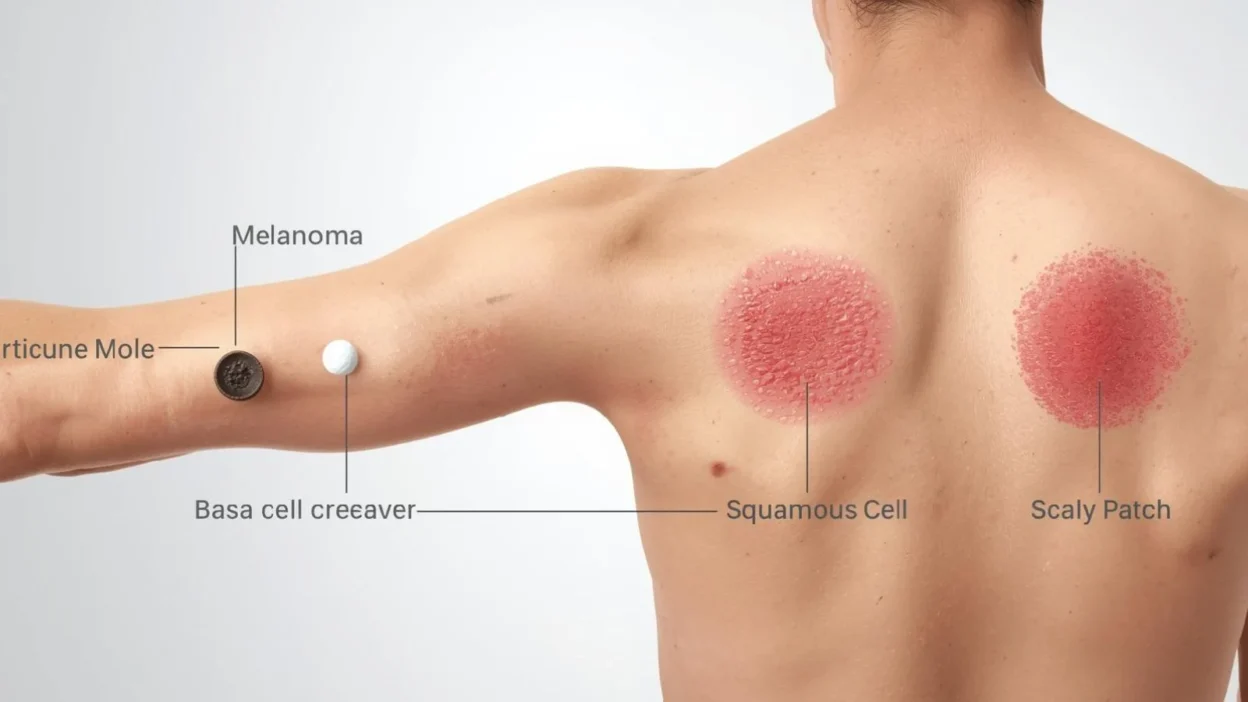
Have you ever spotted a mole, bump, or patch of skin and wondered, “Could this be dangerous?” 🤔 You’re not alone. Many people notice changes in their skin and feel unsure whether it’s normal or something serious. Skin cancer can appear in many forms, and recognizing it early is essential.
Quick Answer: Skin cancer refers to abnormal growths or changes in the skin that may indicate melanoma, basal cell carcinoma, or squamous cell carcinoma. Early detection can save lives, so knowing the early signs of skin cancer is crucial.
🧠 What Does Skin Cancer Look Like?

Skin cancer symptoms vary depending on the type, but the most common visual signs include:
1. Changes in Moles or New Growths
- Look for new moles or growths that appear suddenly.
- Existing moles that change size, color, shape, or border are warning signs.
- Example: A mole growing unevenly with multiple shades of brown or black may indicate melanoma.
2. Persistent Sores or Red Patches
- A sore that does not heal within a few weeks.
- Red, scaly patches that may bleed or crust.
- These often appear in basal cell carcinoma or squamous cell carcinoma.
3. Shiny or Pearly Bumps
- Smooth, pearly bumps are common in basal cell carcinoma.
- They may appear pink, red, or skin-colored and sometimes have tiny blood vessels.
4. Itchy or Painful Spots
- Unexplained itching, tenderness, or pain in a mole or patch of skin can be an early warning sign.
In short: What does skin cancer look like = abnormal moles, spots, or patches that change over time.
📱 Where Is Skin Cancer Most Common?
Skin cancer can develop anywhere on the body, but sun-exposed areas are more likely.
- Face & Neck 🌞 – frequently exposed to sunlight
- Arms & Hands 🖐️ – often show early skin cancer symptoms
- Back & Legs 🦵 – common in men (back) and women (legs)
- Scalp & Ears 👂 – areas people often forget to protect
Tip: Even hidden areas (like under nails or soles of feet) can develop melanoma.
📝 How to Spot Skin Cancer: Types and Visual Signs
| Type of Skin Cancer | Appearance / Symptoms | Key Signs to Watch |
| Melanoma | Dark brown, black, or multicolored mole; irregular border | Asymmetry, Color variation, Diameter >6mm, Evolving shape |
| Basal Cell Carcinoma (BCC) | Pearly or shiny bump, sometimes red or pink; may bleed easily | Slow growth, often sun-exposed areas |
| Squamous Cell Carcinoma (SCC) | Red, scaly, crusted patch; sometimes sore that heals poorly | Rapid growth, may bleed or form crust |
💡 Pro Tip: Use the ABCDE method for spotting melanoma:
- A – Asymmetry
- B – Irregular Borders
- C – Color variation
- D – Diameter larger than 6mm
- E – Evolving or changing over time
🕓 When to Watch vs. When to Seek Help
✅ When to Watch
- Small new moles or minor changes in existing moles
- Occasional itching or irritation
- Non-persistent redness
❌ When Not to Ignore
- Rapidly changing or unusually dark moles
- Persistent sores that bleed or do not heal
- Pain, tenderness, or crusted patches
| Context | Example Observation | Why It Matters |
| Home Monitoring | “Notice mole getting darker” | Track changes early |
| Self-check | “Red scaly patch on arm” | Could indicate basal or squamous cell carcinoma |
| Dermatologist Visit | “Non-healing sore on scalp” | Needs professional diagnosis |
🔄 Similar Skin Conditions or Related Signs
| Condition | Meaning | When to Watch |
| Actinic Keratosis | Rough, scaly patch from sun exposure | Could progress to skin cancer |
| Seborrheic Keratosis | Non-cancerous wart-like growth | Generally harmless but watch for changes |
| Dysplastic Nevus | Atypical mole | Can develop into melanoma |
| Skin Lesion | Any unusual spot on skin | Seek evaluation if changes occur |
❓ FAQs About Skin Cancer
Q1: How quickly does skin cancer grow?
- Growth varies by type. Melanoma can spread quickly, while basal cell carcinoma grows slowly.
Q2: Can skin cancer appear anywhere?
- Yes. Sun-exposed areas are common, but melanoma can appear even in hidden areas like the soles or under nails.
Q3: What are the early warning signs?
- New moles, color changes, asymmetry, sores that don’t heal, or itchy/painful patches.
Q4: How do doctors diagnose it?
- A dermatologist may perform a biopsy, taking a small skin sample to test for cancer.
Q5: Can sunscreen prevent skin cancer?
- Yes! Regular use of sunscreen, hats, and protective clothing reduces the risk of skin damage that can lead to cancer.
✅ Key Takeaways
- Early detection matters: Regular self-checks and knowing what to look for can save lives.
- Use the ABCDE method: Check moles for asymmetry, borders, color, diameter, and evolution.
- See a dermatologist promptly: Any suspicious or changing spot should be evaluated professionally.
Protect your skin: Sunscreen, shade, and clothing are essential preventive steps.