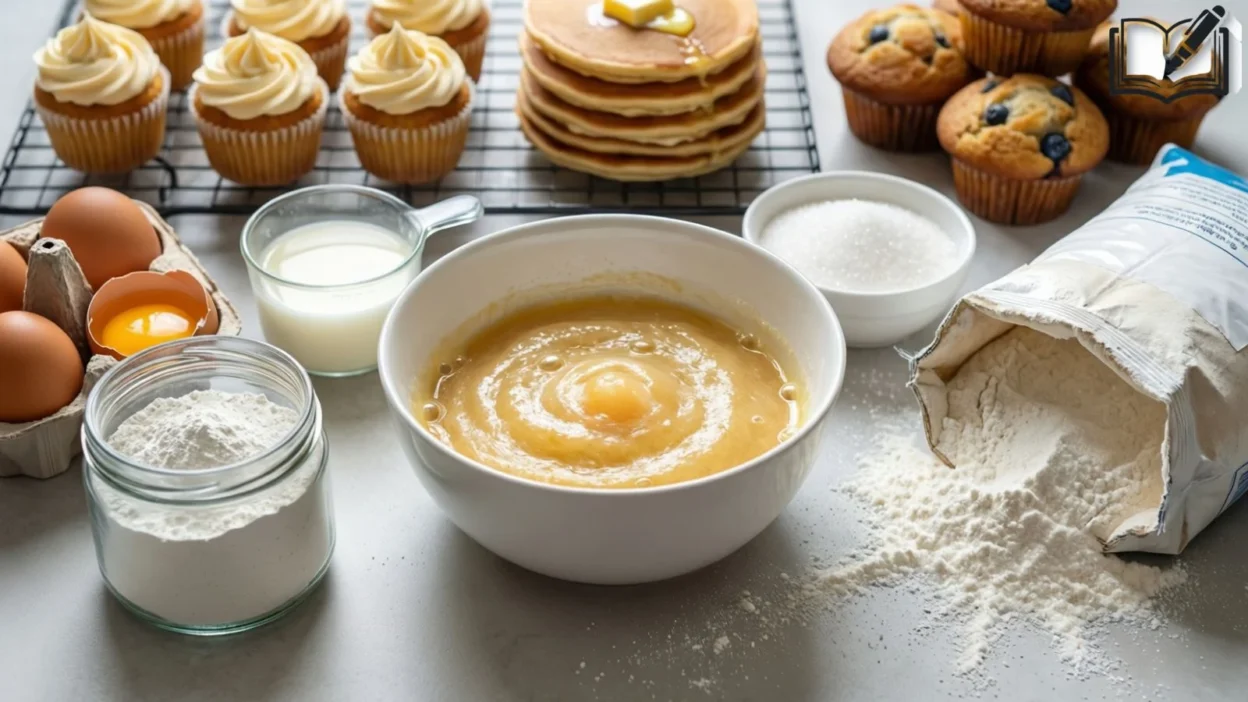
Baking powder is a leavening agent that makes baked goods rise by producing gas bubbles when it reacts with moisture and heat.
Use it in cakes, muffins, pancakes, quick breads, and cookies to make them soft, fluffy, and light.
🧠 What Is Baking Powder and How Does It Work?
Baking powder is a chemical leavening agent, meaning it helps dough and batter rise without yeast. It contains a base (usually baking soda) and an acid in powdered form. When mixed with moisture and heat, it produces carbon dioxide gas.
These tiny bubbles expand during baking, giving cakes, muffins, pancakes, and cookies a soft, airy texture.
Science Behind It:
- Double-acting baking powder reacts twice: once when mixed with liquid and again when exposed to heat.
- Single-acting baking powder reacts immediately with liquid, so you must bake quickly.
In short:
Baking powder = leavening agent = makes baked goods rise and stay fluffy.
📏 How Much Baking Powder Should You Use?
Different recipes require different amounts. Here’s a quick guide:
| Recipe Type | Amount of Baking Powder | Tip |
| Pancakes | 1–2 tsp per cup flour | Fluffy pancakes |
| Cakes | 1–1.5 tsp per cup flour | Light and airy texture |
| Muffins | 2 tsp per cup flour | Soft, puffy muffins |
| Quick Breads | 1–2 tsp per cup flour | Helps rise without yeast |
| Cookies | ½–1 tsp per cup flour | Avoids puffing too much |
Tip: Too much baking powder can make baked goods rise too fast and collapse or taste metallic. Always measure carefully!
📱 Where Baking Powder Is Commonly Used
Baking powder is a kitchen essential for:
- 🍰 Cakes and cupcakes
- 🥞 Pancakes and waffles
- 🥧 Muffins and quick breads
- 🍪 Cookies
- 🥯 Biscuits and scones
It is casual and home-baking friendly, not used in recipes requiring yeast or in fine-dining breads.
💬 Real-Life Examples of Baking Powder in Action
Here are some relatable kitchen “conversations” showing how baking powder works in baking:
A: “Why are my pancakes flat again?”
B: “Forgot the baking powder 😅 add 1 tsp next time!”
A: “This cake feels dense…”
B: “Yep, needs more baking powder. It helps it rise and fluff up.”
A: “Can I skip baking powder in muffins?”
B: “You can, but they’ll be heavy. Baking powder = fluff 😄”
A: “Cookies didn’t spread…why?”
B: “Too much baking powder can make them puff instead of spread 🤷♀️”
A: “Is baking powder the same as baking soda?”
B: “Not exactly! Baking soda needs an acid, while baking powder has its own acid built-in 😎”
🕓 When to Use and When Not to Use Baking Powder
✅ When to Use:
- For cakes, muffins, pancakes, and quick breads
- When you want soft, fluffy texture
- For recipes without yeast
❌ When Not to Use:
- Yeast breads (won’t replace yeast)
- Dense cookies or brownies
- Recipes that already include baking soda + acidic ingredients
| Context | Example Phrase | Why It Works |
| Fluffy cake | “Add 1 tsp baking powder” | Makes cake rise light and airy |
| Pancakes | “Use 1½ tsp baking powder” | Fluffy, soft pancakes |
| Dense brownies | “Skip the baking powder” | Keeps brownies fudgy, not puffy |
| Quick bread | “Mix in 2 tsp baking powder” | Helps bread rise without yeast |
🔄 Alternatives and Similar Ingredients
| Ingredient | Role / Meaning | When to Use |
| Baking Soda | Needs acidic ingredients to rise | Cakes with buttermilk or lemon juice |
| Yeast | Natural leavening | Bread, rolls, pizza dough |
| Self-Rising Flour | Flour + baking powder combined | Quick breads, pancakes |
| Club Soda | Carbonated water | Adds air to batters, pancakes |
❓ FAQs About Baking Powder
Q1: Can I substitute baking powder for baking soda?
A: Only sometimes — baking powder is weaker, so you may need 3x more. Taste may change.
Q2: Why does baking powder go flat?
A: Old or expired baking powder loses its fizz. Check the expiration date!
Q3: Can I use too much baking powder?
A: Yes — it can make baked goods rise too quickly, then collapse or taste metallic.
Q4: Single-acting vs double-acting baking powder?
A: Single-acting reacts immediately; double-acting reacts with liquid and heat, giving better lift.
Q5: Does baking powder need heat to work?
A: Most are double-acting — they start with moisture and finish in the oven.
Q6: What happens if I don’t use baking powder in recipes?
A: Your baked goods may be dense, flat, or heavy. Baking powder is key for fluffy cakes, pancakes, and muffins.
Q7: Is baking powder necessary for muffins?
A: Yes! Muffins rely on baking powder for that soft, airy texture.
✅ Conclusion
Baking powder may look small and simple, but it’s the unsung hero of baking 🏆. It fluffs, rises, and lightens your baked goods, making cakes, muffins, pancakes, and cookies irresistible. Keep it fresh, measure carefully, and watch your recipes turn from flat to fabulous!
Authority Tip: For more reliable baking science, check sources like King Arthur Baking or USDA food guides.