Have you ever felt a burning or gnawing pain in your stomach and wondered, “Is this just heartburn or something more serious?” I remember experiencing a strange upper abdominal ache and immediately wondered if it could be an ulcer.
Quick Answer:
A stomach ulcer (or peptic ulcer) is a sore that forms in your stomach or small intestine lining. It often causes burning stomach pain, bloating, nausea, or discomfort between meals.
Recognizing the signs of a stomach ulcer early is crucial to prevent complications and get proper treatment.
🧠 What Does an Ulcer Feel Like?

A peptic ulcer occurs when the protective lining of your stomach or small intestine breaks down, allowing stomach acid to irritate the tissue.
This causes distinctive sensations that are often more than regular indigestion.
Common ulcer symptoms include:
- Burning or gnawing pain in the upper middle abdomen – usually between meals or at night
- Feeling bloated or full quickly
- Nausea or mild vomiting
- Heartburn or acid reflux – often confused with heartburn vs ulcer
- Dark or black stools – a sign of bleeding, in severe cases
Pain triggers:
- Empty stomach or skipped meals
- Spicy, fatty, or acidic foods
- Alcohol or caffeine consumption
- Stress or overuse of NSAIDs (ibuprofen, aspirin)
Example:
“I’ve been feeling this gnawing pain in my upper stomach for hours after skipping lunch—it feels like something is eating me from the inside!”
In short: What Does an Ulcer Feel Like? = Peptic ulcer = Burning, gnawing stomach pain, bloating, and nausea.
📱 Where Is Ulcer Pain Most Commonly Felt?
Typical ulcer discomfort areas:
- Upper middle abdomen (epigastric region) 🫀 – most common
- Between chest and belly button – sometimes radiates to the back
- Lower chest / heartburn area 🔥 – often confused with acid reflux
Casual tip: Ulcer pain can mimic other conditions, so consult a doctor for proper diagnosis.
💬 Examples of How People Describe Ulcer Pain
Here are realistic ways people talk about ulcer symptoms:
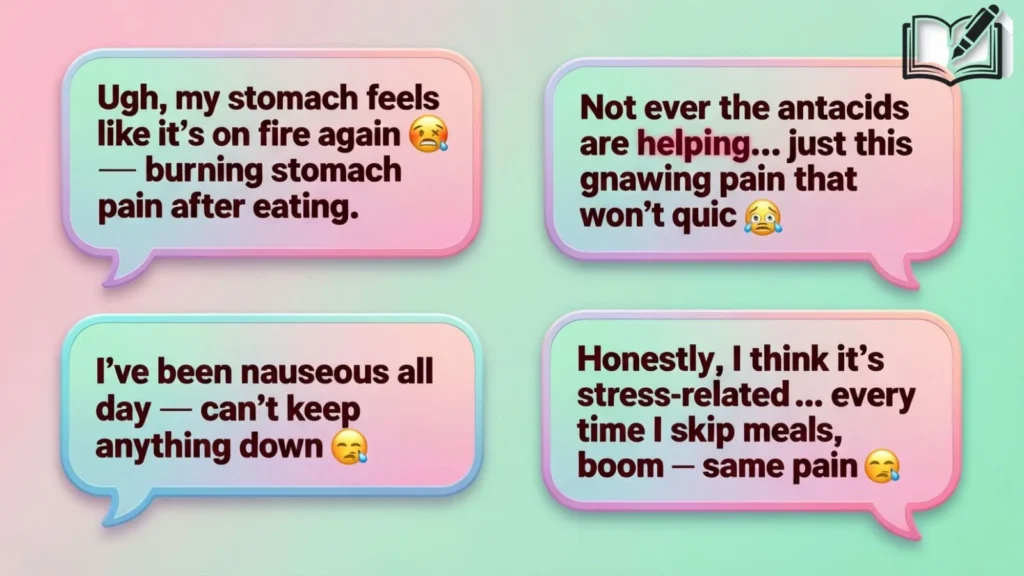
- A: “Omg my stomach is killing me 😣”
B: “Could be a peptic ulcer, I had the same burning stomach pain last month.” - A: “I feel bloated all the time and this burning 🤢”
B: “Sounds like a stomach ulcer—better get it checked.” - A: “Why does my stomach hurt more at night?”
B: “Classic ulcer symptom, especially on an empty stomach.” - A: “I feel full but haven’t eaten much 😔”
B: “Yep, could be bloating from an ulcer.” - A: “Is it heartburn or an ulcer?”
B: “Could be either, but gnawing pain + nausea = think peptic ulcer.”
🕓 When to Pay Attention
✅ When to Be Alert
- Burning stomach pain between meals or at night
- Feeling bloated, nauseous, or full quickly
- Vomiting blood or having black stools
- Unexplained weight loss
❌ When It’s Probably Not an Ulcer
- Mild, short-term discomfort after spicy food
- Occasional heartburn relieved by antacids
- Pain that resolves with simple dietary adjustments
| Context | Example Phrase | Why It Works |
| Friend Chat | “Ouch, my stomach burns 😣” | Casual & relatable |
| Work Chat | “Feeling some stomach discomfort” | Polite & professional |
| Doctor Visit | “Experiencing burning abdominal pain” | Formal & medically accurate |
💊 How to Relieve Ulcer Pain
Lifestyle and home remedies:
- Avoid spicy, fatty, and acidic foods
- Limit alcohol and caffeine
- Don’t smoke – smoking worsens ulcers
- Eat smaller, more frequent meals
- Manage stress through yoga, meditation, or light exercise
Medical treatment:
- Antacids or acid-reducing medications
- Antibiotics if caused by H. pylori infection
- Proton pump inhibitors or H2 blockers
- Follow-up with a doctor for severe or persistent symptoms
🔄 Similar Conditions or Alternatives
| Condition | Feeling / Meaning | When to Be Concerned |
| Gastritis | Stomach lining inflammation, mild burning | Frequent bloating or nausea |
| Acid reflux | Heartburn, chest discomfort | Pain after meals or lying down |
| Indigestion | Bloating, mild discomfort | Occasional, short-term only |
| Gallstones | Sharp upper-right abdomen pain | After fatty meals |
| Food intolerance | Cramping, bloating, gas | Specific food triggers |
❓ FAQs About What an Ulcer Feels Like
Q1: Can an ulcer feel like a heart attack?
A1: Sometimes the upper abdominal pain can radiate to the chest or back, but heart attacks usually have severe shortness of breath or chest tightness.
Q2: Does stress cause ulcers?
A2: Stress alone usually doesn’t cause ulcers, but it can worsen symptoms. Most ulcers are caused by H. pylori bacteria or prolonged NSAID use.
Q3: How long does ulcer pain last?
A3: Pain can last from minutes to hours, often worse on an empty stomach or at night.
Q4: How can I relieve ulcer pain?
A4: Avoid triggers like spicy foods, caffeine, and alcohol. Use antacids or acid-reducing medications, and follow your doctor’s instructions.
Q5: When should I see a doctor?
A5: Seek immediate help if you have severe or persistent pain, vomiting blood, black stools, or unexplained weight loss.
Q6: Can ulcers heal on their own?
A6: Minor ulcers may improve with lifestyle changes, but proper medical diagnosis and treatment are essential to prevent complications.
Conclusion:
Understanding what an ulcer feels like can help you recognize warning signs early. Burning, gnawing pain, bloating, and nausea are common ulcer symptoms. With proper lifestyle changes, treatment, and medical guidance, most ulcers can heal safely.
Always listen to your body, and don’t ignore persistent stomach pain.