
Have you ever wondered what a paralegal really does? I remember first hearing the term while exploring law careers, and I thought, Is this a lawyer or just an assistant?
It turns out, paralegals play a crucial role in the legal world, supporting lawyers in ways that keep law firms running smoothly.
Quick Answer:
A paralegal is a professional who helps lawyers by researching laws, drafting legal documents, and managing case files. It’s a formal, professional role that requires training, attention to detail, and a strong understanding of legal procedures.
What Does a Paralegal Do? 📝
A paralegal is trained to perform legal tasks under the supervision of a licensed attorney. They cannot give legal advice or represent clients in court, but their work is essential for lawyers to function efficiently.
Key paralegal duties and responsibilities include:
- Conducting legal research and summarizing case law
- Drafting contracts, briefs, motions, and other legal documents
- Organizing client files and evidence
- Communicating with clients, courts, and other professionals
- Assisting in trial preparation and discovery processes
Example:
A: “I just started working at a law firm.”
B: “Oh, are you a paralegal or an attorney?”
In short: Paralegal = Legal Assistant = Supports lawyers with research, documents, and case management.
A Day in the Life of a Paralegal 📅
Understanding the day-to-day tasks of a paralegal can help clarify the role for aspiring professionals:
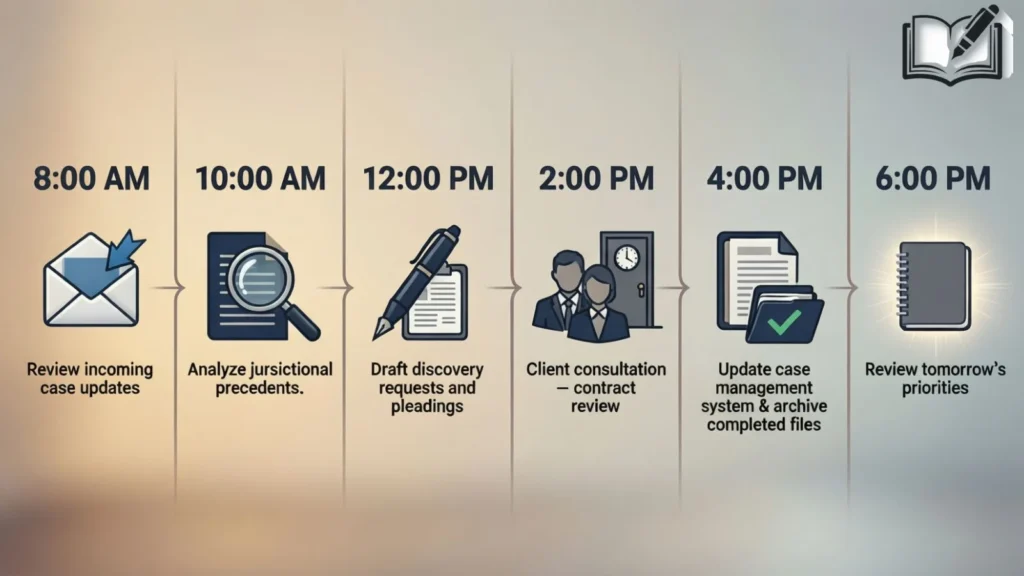
- Morning: Review emails, update case files, and organize schedules
- Late Morning: Conduct legal research or summarize case law
- Afternoon: Draft contracts, motions, or other documents
- Late Afternoon: Meet with clients or assist attorneys in court preparations
- End of Day: Ensure all documents and files are updated and ready
This structured day highlights how paralegal work combines research, communication, and organization.
Where Paralegals Work 🏢
Paralegals are commonly found in:
- Law firms – assisting attorneys with case preparation
- Corporate legal departments – handling contracts, compliance, and internal legal matters
- Government agencies – supporting public defenders, prosecutors, and administrative offices
- Nonprofits and legal aid organizations – helping clients access legal services
Tone: Formal, professional, and career-oriented. Paralegals are not casual roles, and this term is mostly used in career discussions, resumes, and legal networking platforms like LinkedIn.
Paralegal Career Path and Qualifications 🎓
Becoming a paralegal usually requires:

- Education:
- Associate or bachelor’s degree in paralegal studies, criminal justice, or law-related fields
- Associate or bachelor’s degree in paralegal studies, criminal justice, or law-related fields
- Certification (Optional but Recommended):
- NALA Certified Paralegal (CP)
- NFPA Paralegal Certificate
- State-specific paralegal certifications
- NALA Certified Paralegal (CP)
- Skills Needed:
- Strong research and writing abilities
- Attention to detail and organization
- Communication and client management skills
- Strong research and writing abilities
Career Path: Many paralegals advance to senior paralegal roles, legal project management, or even law school to become attorneys.
Paralegal Salary and Job Outlook 💰
The paralegal profession is stable and growing, with good earning potential:
- Entry-Level Paralegal: $45,000 – $55,000 per year
- Mid-Level Paralegal (3–5 years): $55,000 – $70,000 per year
- Senior Paralegal / Specialized Areas: $70,000 – $90,000+ per year
Job Outlook: According to the Bureau of Labor Statistics, paralegal jobs are projected to grow by 12% from 2024 to 2034, faster than the average for all occupations.
Paralegal vs Similar Roles 🔄
| Role | Meaning | Key Difference | When to Use |
| Paralegal | Assists attorneys with legal research & documents | Cannot give legal advice | Law firms, corporate legal teams |
| Legal Assistant | Administrative support to lawyers | Focused more on clerical tasks | Office and support staff |
| Legal Secretary | Manages correspondence, court documents, and filings | Less involved in research or drafting | Law office |
| Law Clerk | Often a law student assisting attorneys | Typically temporary or internship role | Law firms, courts |
| Litigation Support Specialist | Prepares trial exhibits and manages legal tech | Specialized in trial preparation | Litigation-focused firms |
| Case Manager | Coordinates client cases and appointments | Focuses on scheduling and client follow-up | Corporate or nonprofit settings |
FAQs About Paralegals ❓
Q1: Can a paralegal give legal advice?
A: No. Paralegals cannot provide legal advice or represent clients in court. Only licensed attorneys can.
Q2: What skills make a good paralegal?
A: Strong research, organization, writing, and communication skills are essential.
Q3: How long does it take to become a paralegal?
A: Depending on education, 1–4 years for an associate or bachelor’s degree, plus optional certification.
Q4: Do paralegals work independently?
A: Only under attorney supervision. They cannot practice law on their own.
Q5: Is being a paralegal a good career choice?
A: Yes. It’s a stable, respected career with opportunities in law firms, corporations, government, and nonprofits.
Why Paralegals Are Important ⚖️
Paralegals save lawyers time, reduce costs, and ensure legal processes run smoothly. Without paralegals, attorneys would spend significantly more time on research, document drafting, and administrative tasks.
Whether you’re considering a paralegal career, exploring job opportunities, or just curious about the legal profession, understanding what paralegals do gives you insight into the backbone of the legal industry.